BIKO Progressive Resistance (PR) Bands


About the BIKO® Progressive Resistance (PR) Bands:

The BIKO® Progressive Resistance Bands is an elastic resistance device that provides more stability and control for dogs with hind limb weakness, lack of coordination and/or decreased proprioception. When used as an assistive device, the bands help the dog when walking and turning – assisting the forward movement of the feet and help to prevent knuckling over.

With more stability and control, these dogs get much more benefit out of exercise – whether walking at home or exercising at your veterinary clinic.
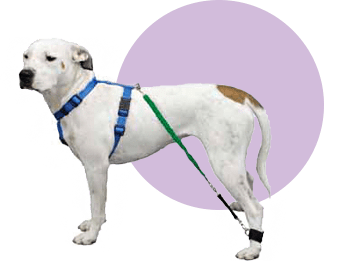
How the Biko Progressive Resistance (PR) Bands Work

The BIKO Progressive Resistance (PR) Bands is an elastic resistance band that runs from the dorsal midline D ring of a standard Roman harness to the tarsal area of the dog’s hind limbs, just below the hock. The bands come in a color-coded system of progressive resistance – yellow (light), red (medium), and green (strong).

The bands stretch slightly as the dog walks and assists the forward movement of the feet, also protecting and preventing the feet from knuckling under.  This is very helpful for dogs with poor muscle strength, or nerve disorders that prevent proper foot placement.  As the right hind limb moves forward, the resistance that develops in the left Biko PR Band prevents the left foot from slipping sideways or backwards; the process is repeated on the other side as the dog walks.

With more stability and control, dogs with hind limb weakness, lack of coordination, or decreased proprioception can get much more benefit out of exercise – whether walking at home or exercising at a rehab facility.

The Biko PR Bands work well as a sole physiotherapeutic modality, and in conjunction with other modalities such as:  the underwater treadmill, cavalettis, peanut exercise balls, balance boards, wheelchairs. And other modalities.

Watch Videos

Without Bands

Bands Only

Band Plus Underwater Treadmill

Bands Plus Wheelchair With Skis

Diseases & Conditions That May Benefit:

  • Degenerative myelopathy
  • Wobbler’s Syndrome
  • Spinal cord injuries
  • Intervertebral Disc Disease (IVDD)
  • Fibrocartilaginous Emboli (FCE)
  • Hyperadrenocorticism/Cushing’s disease
  • Diabetes mellitus
  • Lack of balance caused by diseases of the cerebellum
  • Obesity and lack of conditioning/exercise
  • Cruciate ligament tear/rupture (at least 8 weeks post-surgery)
  • Arthritis of the hips/hip dysplasia
  • Post-op orthopedic surgery
  • Patellar luxation
  • Lumbosacral disease
  • Laryngeal paralysis with a polyneuropathy component

Authenticity Notice