About Hind Limb Weakness

aniMotion ProductsHind Limb Weakness

A Trigger For An Immediate Visit To Your Veterinarian

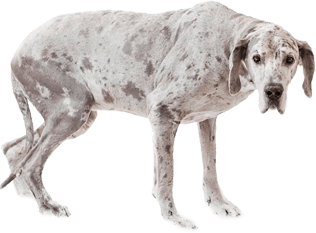
Hind limb weakness can result from many different causes. It may be related to degenerative joint disease, muscle loss or atrophy, neurologic dysfunction, endocrine disease, or orthopedic injury.

While it is more common in senior dogs, it should never be dismissed as “normal aging”.

aniMotion Products
aniMotion Products

Common Symptoms

Dogs affected with hind limb weakness can exhibit:

  • Muscle loss
  • Muscle atrophy
  • Wobbly sway
  • Cross-over
  • Knuckle over
  • Stumbling up curbs
  • Dragging their hind limbs
  • Difficulty standing and/or sitting
  • Difficulty going up or down stairs
  • Diminished proprioception
  • Decreased endurance

If you notice any of these, consult your veterinarian.

Videos of Hind Limb Weakness

Any of the below symptoms should trigger an immediate visit to your vet. 

Early and definitive diagnosis and treatment has shown to have the greatest benefit in outcome and quality of life for your dog.

How Biko PR Bands Can Help

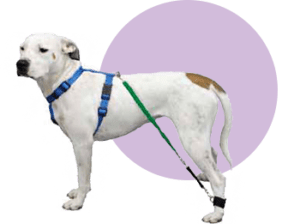
While all dogs can benefit from elastic resistance training, Biko Progressive Resistance (PR) Bands are specifically designed to support dogs affected by hind limb weakness or paresis.

They help encourage improved limb placement, mobility, and muscle engagement during movement.

Diseases & Conditions That May Benefit:

  • Degenerative myelopathy
  • Wobbler’s Syndrome
  • Spinal cord injuries
  • Intervertebral Disc Disease (IVDD)
  • Fibrocartilaginous Emboli (FCE)
  • Hyperadrenocorticism/Cushing’s disease
  • Diabetes mellitus
  • Lack of balance caused by diseases of the cerebellum
  • Obesity and lack of conditioning/exercise
  • Cruciate ligament tear/rupture (at least 8 weeks post-surgery)
  • Arthritis of the hips/hip dysplasia
  • Post-op orthopedic surgery
  • Patellar luxation
  • Lumbosacral disease
  • Laryngeal paralysis with a polyneuropathy component

Biko Progressive Resistance (PR) Bands Are Not Intended For:

aniMotion Products

  • Dogs who are paralyzed
  • Dogs with acute painful conditions
  • Dogs with an acute cruciate ligament tear
  • Dogs with broken bones
  • Dogs with no motor function in one or more limbs
  • Dogs with severe weakness and/or ataxia that requires that the dog be moved or lifted to walk
  • Dogs with severe spasm or increased tone in one or both hind limbs

When in doubt, speak with your veterinarian or rehabilitation professional.

See the Difference

Below are dogs with various conditions before starting Biko PR Bands and during use.

Notice improvements in mobility and reductions in knuckling.

Olivia (Before)

Olivia (After)

Athena (Before)

Athena (After)

Biko K9 Weight Cuffs
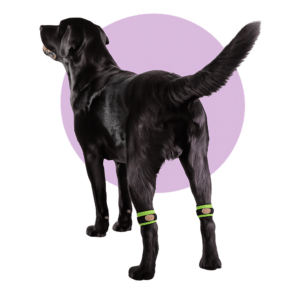
Lab with biko weight cuffsBiko K9 Weight cuffs offer the benefits of both a weight training modality for rehab patients and a conditioning tool for athlete and working dogs:

  • Improves range of motion and gait
  • Builds strength and muscle mass
  • Increases bone density
  • Increases proprioception

Dogs with neurologic conditions: Weight cuffs help them to have more control over their movements and achieve more benefit out of exercise.

How The Biko K9 Weight Cuffs Work

The weight cuffs are worn above the tarsal joint of the hind limbs. The weights are determined by the dog’s body weight. Your veterinarian, PT, or handler will advise you on the appropriate weights to use on your dog.
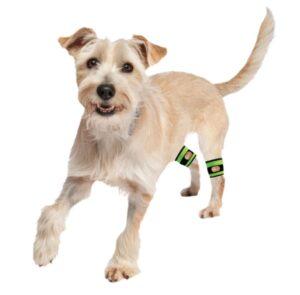
Dog with Biko weight cuffsWeights range from ½ ounce to 4 ounces. Training should progress from lighter weights to heavier ones.

To Achieve Maximum Benefits

Use the Biko k9 weight cuffs for controlled short durations of time, at paces that are low impact. For example, leashed walks and controlled trots. When using both Biko k9 weight cuffs and the Biko Resistance Bands on your dog, always use separately, at opposite times of the day, or on different days.

Weight cuffs are not intended for dogs with:

  • Achilles tendon injuries
  • Tarsal joint injuries
  • Metatarsal or hind limb digit injuries.

Weight cuffs are typically not used on the dog’s forelimbs because dogs place 60% of their body weight through their forelimbs. Putting more weight on their forelimbs may be harmful. However, there are conditions where using weight cuffs on the forelimbs are
indicated. Your veterinarian will advise when and how to use.